Why Custom Restaurant Booths Are Worth the Investment for Long-Term Success
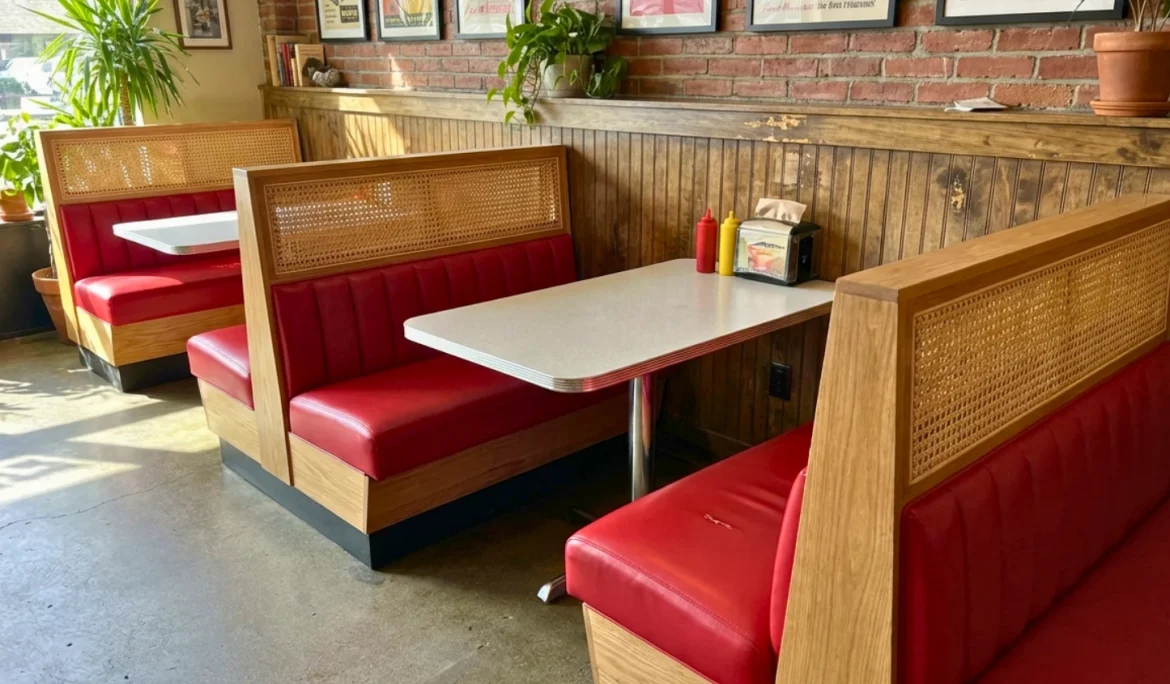
When you’re opening a new restaurant or breathing fresh life into an existing one, the seating layout is usually the puzzle piece that gives people the most headaches. You have a vision for the flow of the room, but you also have hard numbers to hit regarding capacity. In the hospitality world, every square foot equals potential revenue, but cramming people in like sardines ruins the experience. This is usually the moment where restaurant owners face the big decision: do you browse a catalog for standard, pre-built booths, or do you go the custom route?
It might feel easier to just click “add to cart” on a standard 48-inch booth, but over the years we’ve seen too many business owners regret that decision six months down the line. There is a persistent myth that custom work is strictly a luxury reserved for high-end dining, but when you actually crunch the numbers on longevity, maintenance, and space efficiency, custom booth seating is often the more pragmatic business choice.
Let’s talk about why “off-the-rack” seating rarely works the way you want it to, and why building specifically for your space is the secret weapon of successful restaurant design.
The “Good Enough” Fit vs. The Perfect Fit
Imagine buying a suit. You can grab one off the rack that fits your shoulders okay but is too loose in the waist and too short in the legs. You can wear it, sure, but you won’t look sharp, and you probably won’t be comfortable. Pre-built booths adhere to strict industry standards—usually standardized lengths and heights that are designed to fit into a hypothetical “average” restaurant.
The problem is that no building in Los Angeles is “average.” Whether you are leasing a quirky vintage spot in Van Nuys with exposed brick and weird alcoves, or a modern concrete shell in Downtown LA, your walls aren’t perfectly straight, and your columns are never where you want them to be.
When you buy pre-built, you end up with “dead zones.” These are those awkward six-inch gaps between the end of the booth and the wall where dust bunnies collect and silverware gets lost. You lose valuable seating real estate because you’re forced to work around the furniture, rather than making the furniture work for the room.
Custom fabrication allows us to build efficiently right up to the wall. We can wrap a booth around a structural column so that obstacles become features. We can alter the depth of the seat by just two inches to widen an aisle for your servers without sacrificing customer comfort. That level of precision means you might actually fit **more** tables into your floor plan comfortably. Over a year of service, those two extra tables can significantly impact your bottom line.
Materials That Actually Handle Commercial Abuse
There is a massive difference between “commercial grade” listed on a website and the actual materials needed to survive a busy Friday night in a popular bar. Pre-built manufacturers are in the business of volume. To keep costs down and shipping weights manageable, they often use engineered woods, particle board, or hollow frames.
These materials are fine for a while, but restaurants are brutal environments. You have heavy traffic, people sliding in and out constantly, spills, cleaning chemicals, and the occasional customer standing on the seat to take a group photo. Particle board swells when it gets wet (and it will get wet underneath those mop boards). Once the internal structure weakens, the booth starts to wobble. A wobbling booth feels cheap, and that feeling subconsciously transfers to how the customer perceives your food.
We build from the frame up. We are talking about solid hardwoods and marine-grade plywoods—materials that have structural integrity. We construct frames meant to hold weight without groaning or shifting.
Furthermore, we need to talk about foam. The foam is usually the first thing to fail in mass-produced seating. Have you ever sat in a booth where you immediately sank down and could feel the wooden board underneath your thighs? That is low-density foam collapsing. It happens quickly with standard manufacturing. We use high-density, high-resiliency foam that bounces back. It supports the customer firmly, making them comfortable enough to order dessert and another round of drinks, but durable enough to look the same three years from now as it did on opening day.
Aesthetic Cohesion: Matching the Vibe
Your furniture tells a story before the waiter even hands over a menu. If you are creating a moody, upscale speakeasy, a shiny, standard black vinyl booth looks out of place. If you are aiming for a bright, organic brunch spot, heavy, generic seating drags the energy down.
Going custom gives you unlimited control over the visual language of the space. It’s not just about picking a color. It’s about texture, tufting styles, and trim.
Here are a few design elements that are hard to get right with pre-built options:
- Channel Tufting: Whether vertical or horizontal, the spacing and depth of the channels need to scale with the size of the booth to look right.
- Headroll Height: Sometimes you want high backs for privacy dividers between tables; other times you want low profiles to keep the room feeling open.
- Leg Styles: Do you want a closed, upholstered base with a crumb catch (easier for cleaning), or wooden legs for a mid-century look?
- Fabric Mixing: We often mix materials, using a heavy-duty, easy-clean vinyl on the seat where the wear happens, but a beautiful, soft woven fabric on the backrest for comfort and style.
Pre-built options usually offer you “Black,” “Red,” or “Tan.” Custom upholstery opens up the entire world of textile libraries. We can help you select fabrics that are bleach-cleanable, antimicrobial, and stain-resistant while still looking like high-end velvet or linen.
The Hidden Cost of Replacement
This is the part that budget-conscious restauranteurs often overlook. The initial price tag on a pre-built booth is lower than custom work. That is an undeniable fact. However, the “cost of ownership” is usually higher.
If a pre-built booth tears or breaks within 18 months—which is common in high-volume establishments—you have to buy a new one or pay for extensive repairs on a frame that isn’t worth saving. If you buy a replacement, you now have one brand new shiny booth next to ten worn-out ones, making your interior look mismatched.
When you invest in quality custom frames from the start, the frame is a lifetime asset. Five or seven years down the road, when the vinyl finally wears out or you decide to rebrand your color scheme, you don’t throw the furniture away. You call us. We strip it down to the frame, add new foam padding, and reupholster it. The cost to recover a good frame is significantly less than buying new custom furniture, and the result is essentially brand new.
It is sustainable, it is cost-effective in the long run, and it maintains the consistency of your establishment.
Specific Solutions for Los Angeles Spaces
Operating in the LA area, specifically places like Van Nuys or the denser parts of the city, presents unique spatial challenges. Rent is high, so spaces are often smaller or oddly shaped. We have worked on projects where we had to build booths to fit into curved bay windows, or create banquette seating that doubled as storage for restaurant supplies.
One specific trend we are seeing a lot of lately is the need for “hybrid” spaces. Restaurants are increasingly multifunctional—morning coffee shop, lunch spot, evening bar. The seating needs to facilitate all those activities.
Standard booths are usually too deep for coffee sipping or too upright for lounging with a cocktail. When we build custom, we can dial in the “pitch” (the angle of the back) and the seat depth to match the primary activity of your venue. We can even install integrated power outlets and USB ports directly into the booth base, which is a massive draw for the lunch crowd looking to work on their laptops. Trying to retrofit electrical into a pre-built hollow booth is a nightmare and a fire hazard; building it in from the start is clean and professional.
The Process is Easier Than You Think
Many business owners avoid custom work because they think it involves a long, complicated design process with blueprints and architects. While we certainly work with designers and architects all the time, we also work directly with owners who just have a sketch on a napkin and a dream.
We try to make this collaborative. We can come to your location, measure the floor, look at the lighting, and discuss what you need. We can bring swatch books so you can see how the fabric looks in your actual lighting conditions (which is crucial, because restaurant lighting is very different from showroom lighting).
We handle the fabrication here locally. This is another advantage over ordering online. If you order pre-built booths from a large supplier, and they arrive with shipping damage, or they are backordered for three months, your opening day is ruined. There is no one to call except a customer service 1-800 number. When you work with a local shop, you know exactly where your furniture is. You can come see the frames being built. We treat our deadlines as sacred because we know that in the restaurant business, if you aren’t open, you’re losing money.
Beyond the Booth: A Unified Look
While this post is focused on booths, remember that custom upholstery allows you to tie the whole room together. If we build your booths, we can also upholster your bar rail in matching leather. We can create custom seat cushions for your patio chairs that coordinate with the interior design, creating a seamless flow from inside to outside. We can even create acoustic wall panels wrapped in fabric to help dampen the noise levels in a busy dining room—a huge factor in customer comfort that is often ignored.
Off-the-shelf furniture creates a disjointed look because you are sourcing different pieces from different vendors. Custom fabrication acts as the thread that sews the whole design concept together.
Making the Right Choice for Your Business
Designing a restaurant is a series of thousand-dollar decisions. It is stressful. But your seating is literally the foundation of your guest’s experience. If they aren’t comfortable, they won’t stay for dessert. If the booth is wobbly, they will wonder if the kitchen is clean.
We have been serving Los Angeles, Van Nuys, and the surrounding areas long enough to see trends come and go, but quality manufacturing never goes out of style. Whether you need a classic, deep-buttoned leather look for a steakhouse or sleek, minimalist vinyl for a taco spot, the principles remain the same: build it strong, build it to fit, and build it to last.
If you are looking at blueprints right now, or standing in an empty room wondering how to maximize your seating chart, don’t assume custom is out of reach. It might just be the smartest investment you make for your new venture.