
Stop Losing Customers to Uncomfortable Seating
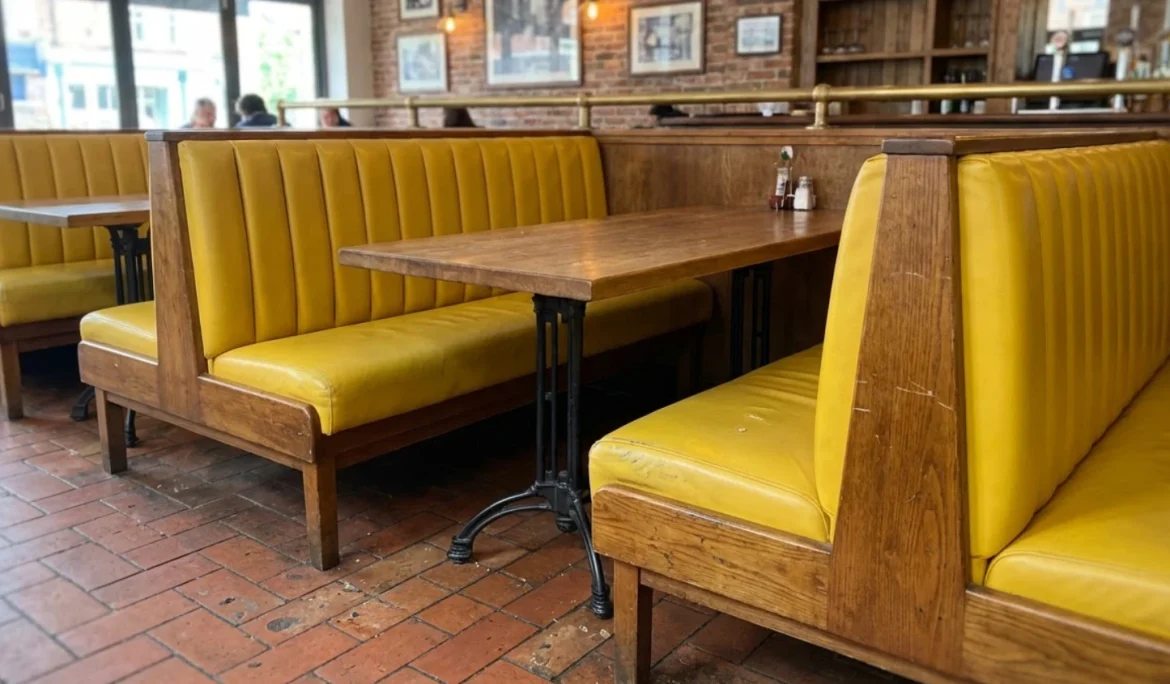
You spend hours perfecting your menu. You agonize over the lighting, the playlist, and the color of the napkins. But there is a silent killer in the hospitality industry that very few owners talk about until the negative Yelp reviews start rolling in: physical discomfort.
We have all been there. You walk into a trendy new spot in Los Angeles, the vibe is perfect, but twenty minutes into the meal, you find yourself shifting your weight. The seat feels like a wooden plank wrapped in a thin layer of fabric, or worse, you sink so deep into a blown-out booth that you are practically eating off your chin.
At that moment, the food stops mattering. The customer isn’t thinking about the complexity of your sauce; they are thinking about how quickly they can ask for the check and leave.
This isn’t just a minor annoyance; it is a direct hit to your bottom line.
The “Sinking Feeling” of Cheap Foam
When you are outfitting a restaurant or a bar, budget is obviously huge. It is tempting to look at a quote for commercial booths and choose the option that looks good on the surface but saves a few thousand dollars on materials. Usually, that savings comes from the inside out—specifically, the foam.
Low-density foam is the culprit. In the industry, we see this constantly. A manufacturer will use what we call “filler foam” for the main seating area. It feels fine for the first three months. But commercial seating takes a beating. It deals with constant compression, sliding, and weight distribution shifts for 8 to 12 hours a day.
Cheap foam breaks down rapidly. It loses its “modulus” (the ability to push back against weight). Once that support is gone, your customers are sitting directly on the plywood frame or the springs. This leads to what we call “bottoming out.” When a customer bottoms out, their subconscious reaction is immediate: *This place feels cheap.* It doesn’t matter if you have a Michelin star consultant in the kitchen; if the physical experience feels cheap, the brand perception drops.
Why High-Density Foam is an Investment, Not an Expense
Here in our Van Nuys workshop, we handle a lot of commercial re-upholstery jobs where the fabric is still perfectly fine, but the guts of the booth are destroyed. The business owner has to pay for labor all over again just to fix the insides.
Using High-Resiliency (HR) foam from the start changes the game. HR foam is chemically structured to bounce back instantly after compression. It lasts years longer than standard poly-foam.
Think about table turnover creates revenue. If a seat is unwearably uncomfortable, sure, guests might leave faster. But they won’t come back. And they certainly won’t stay for dessert or that second round of cocktails.
Comfortable seating encourages what is known as “dwell time” in the right way. You want guests relaxed enough to order another bottle of wine, but supported enough that they remain alert and engaged with the environment. That balance is achieved entirely through foam density and firmness ratings.
Customization Allows for “Zone Seating”
One big advantage of working with a local custom shop like ours, rather than ordering pre-made booths from a catalog, is that we can engineer the seat for specific uses.
A lounge chair in a hotel lobby needs a different foam profile than a dining chair in a steakhouse.
The Lounge Profile: This usually requires a softer top layer (dacron or memory foam) laminated over a firm core. You want the guest to sink in slightly to feel relaxed.
The Dining Profile: This needs a higher firmness rating. You want the guest sitting “on” the seat, not “in” it, so they are at the proper height relative to the table. If the foam is too soft, a short guest sinks down and feels like a child at the table.
We can actually laminate different densities of foam together. We might use a very rigid, dense foam for the base to provide structure, a high-resiliency middle layer for support, and a plush crown layer for that initial “ah, this is nice” feeling when you sit down. You simply cannot get that level of engineering from mass-produced, flat-packed furniture.
The Hygiene Factor
There is another aspect of foam quality that became massively important over the last few years: hygiene and liquid resistance.
Cheap, open-cell foam acts like a sponge. If a drink spills on a banquet seat, liquid seeps through the fabric and soaks into the foam. It sits there. It breeds bacteria. It starts to smell.
When we build custom commercial seating, especially for high-traffic bars or family restaurants, we often recommend closed-cell foams or wrapping high-quality foam in a breathable moisture barrier before the fabric goes on. This protects your investment. The foam stays dry, the smell stays away, and the seat lasts twice as long. It is a detail customers never see, but they absolutely smell the absence of it.
Don’t Let Your Furniture Be an Afterthought
We love working with designers who bring us wild sketches of curved velvet banquettes or intricate tufted backs. We make those look beautiful. But our real pride comes in the stuff you can’t see.
We invite our commercial clients to come to our shop in Van Nuys. We actually want you to sit on the foam before we cover it. We want you to feel the difference between a 1.8 density foam and a 2.8 high-resiliency foam. It is a night and day difference.
Your chairs and booths are the most used equipment in your business. They get more use than your stove, more use than your espresso machine, and more use than your front door. If you are opening a new space or realizing your current seating is looking a little tired, let’s talk about what is going on inside the cushion.
Upgrading your foam or building custom from scratch isn’t just about upholstery. It’s about ensuring that the last thing your customer remembers is how great the night was, not how much their back hurts.